The American role and the cause for hope
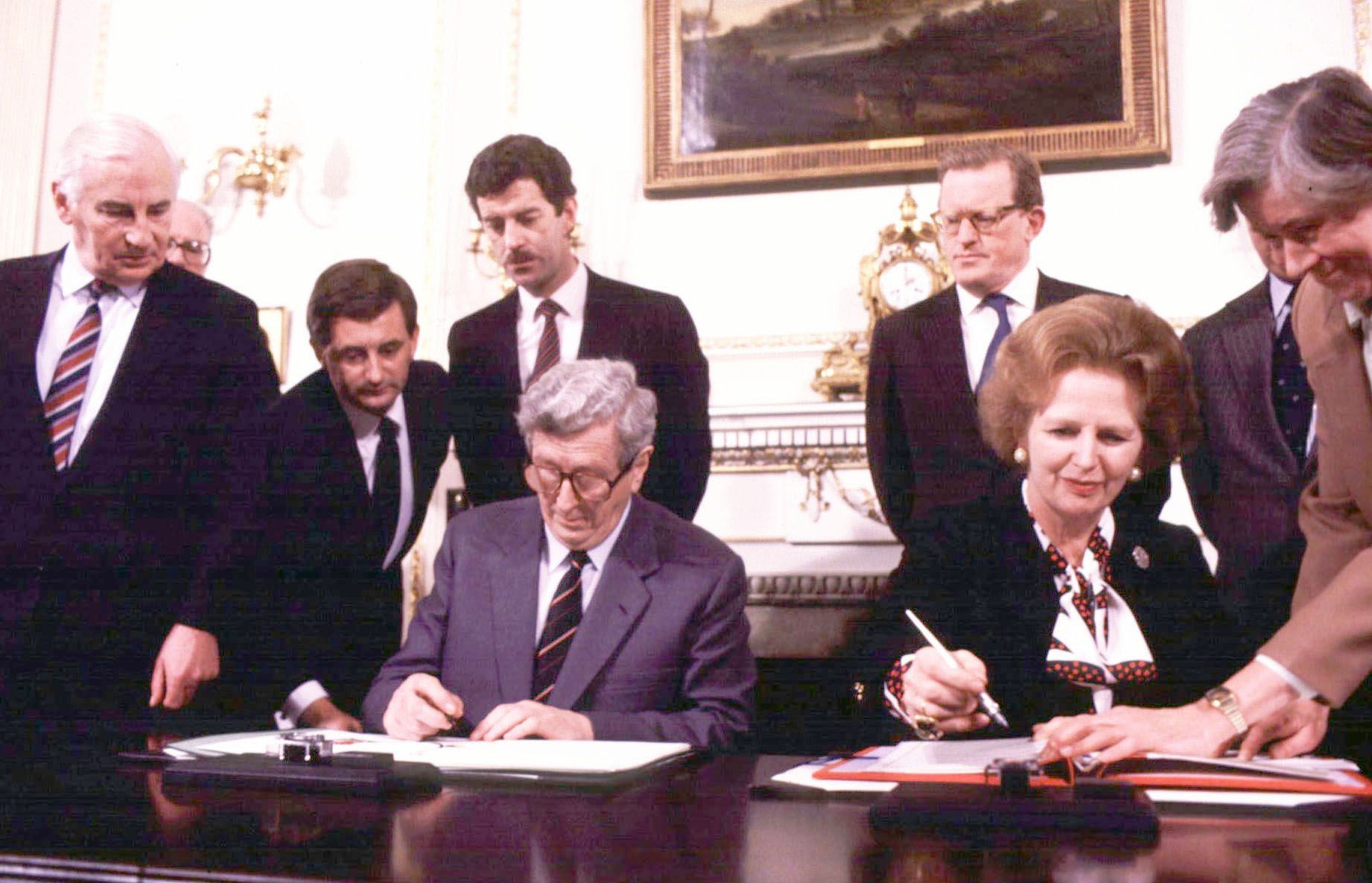
Forty years ago, on November 15 1985, something extraordinary occurred: the heads of the Irish and British governments, Taoiseach Garret FitzGerald and Prime Minister Margaret Thatcher signed the Anglo-Irish Agreement at Hillsborough Castle, the British royal family’s residence in Northern Ireland.
It was a historic moment. The Anglo-Irish Agreement was the first time that Ireland and Britain forged a lasting partnership on Northern Ireland. It was the product of deft diplomacy and political courage, with no small role for the United States—whether President Reagan, President Carter before him, or other American friends of Ireland.
President Ronald Reagan and First Lady Nancy Reagan during their 1984 visit to Ireland. RollingNews.ie photo.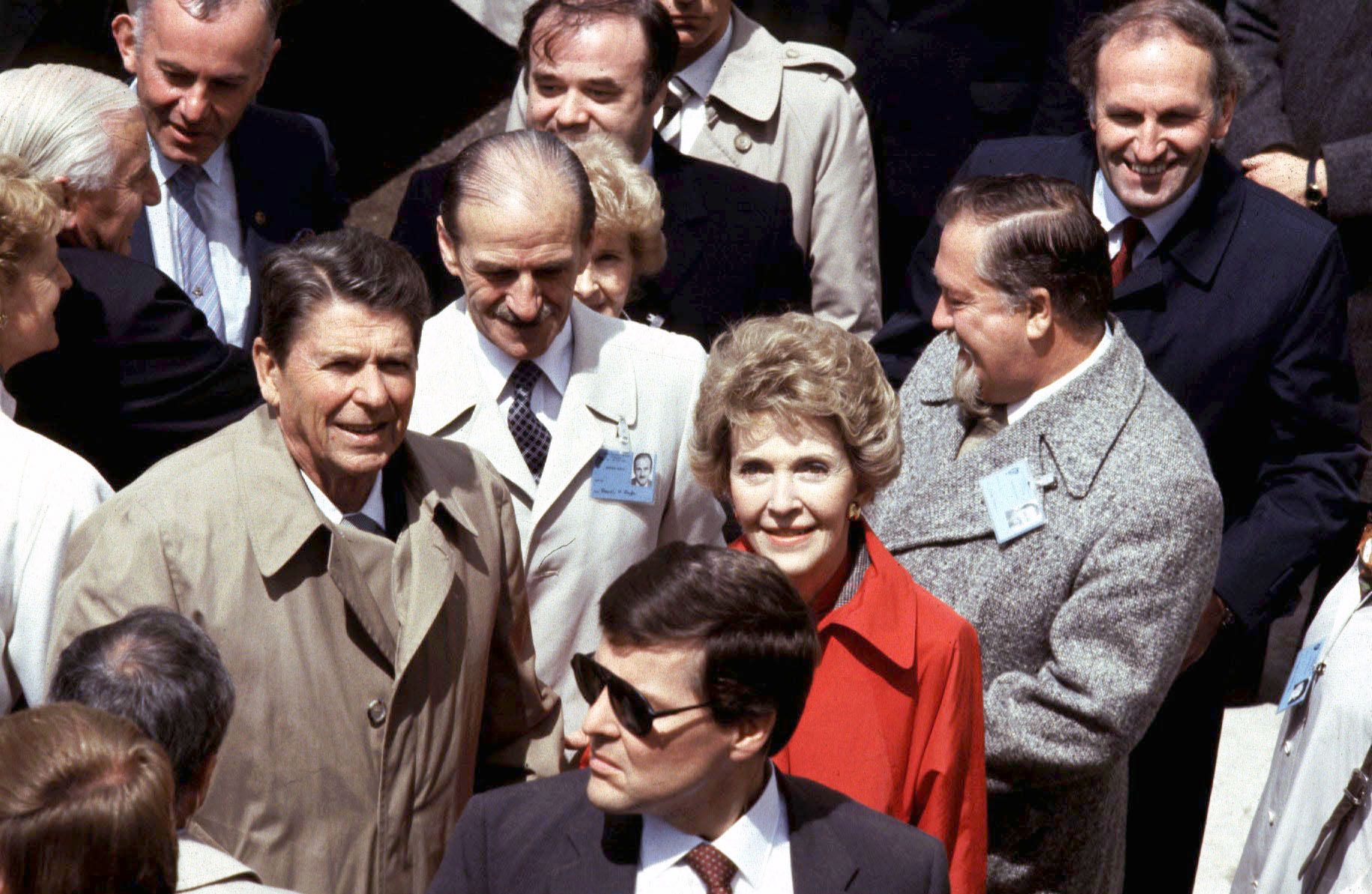
I grew up not far from the border in County Louth. By 1985, Northern Ireland, forty minutes by car, had become the most militarised and violent region in Western Europe.
While most people have heard of the Good Friday Agreement, the culmination of the peace process, fewer will remember the Anglo-Irish Agreement that preceded it.
Anniversaries are important. They situate us in history to see how a story fits together, backwards and forwards.

Sometimes they can offer lessons. This anniversary does just that.
When we look at the Middle East or Sudan, it can be easy to fall into a kind of fatalism that tells us conflict in divided societies is intractable. Peace in Northern Ireland is a rare and precious thing: a political settlement that has endured.
The Troubles began in 1969, when violence broke out across community divides in Northern Ireland. The situation spiralled over the following years: in 1972, around 500 people were killed.
There were fears of civil war. From 1977, the numbers killed each year hovered around the one hundred mark.
This may seem like a small figure when set against other modern conflicts.
But each death was a singular tragedy that frayed the fabric of a small place. Northern Ireland had become the most violent and militarised region in Western Europe.
Violence and division persisted throughout the 1970s and 1980s. Political initiatives came to nothing. Then, in 1983, an Irish official, walking along a Dublin canal with his British counterpart, made a radical proposition: an "Irish dimension" to governing Northern Ireland, in exchange for recognition of Northern Ireland’s status in the United Kingdom.
The negotiations that followed were long and complex, but that basic equation held. What emerged was remarkable: an international treaty that gave the Irish government a formal role in the governance of Northern Ireland, the territory of another state.
The spirit of partnership between the two governments realised in the Agreement would prove the essential stabilising force for the peace process. It led to the Good Friday Agreement, which took the gun out of Irish politics for good.
Ambassador Geraldine Byrne Nason.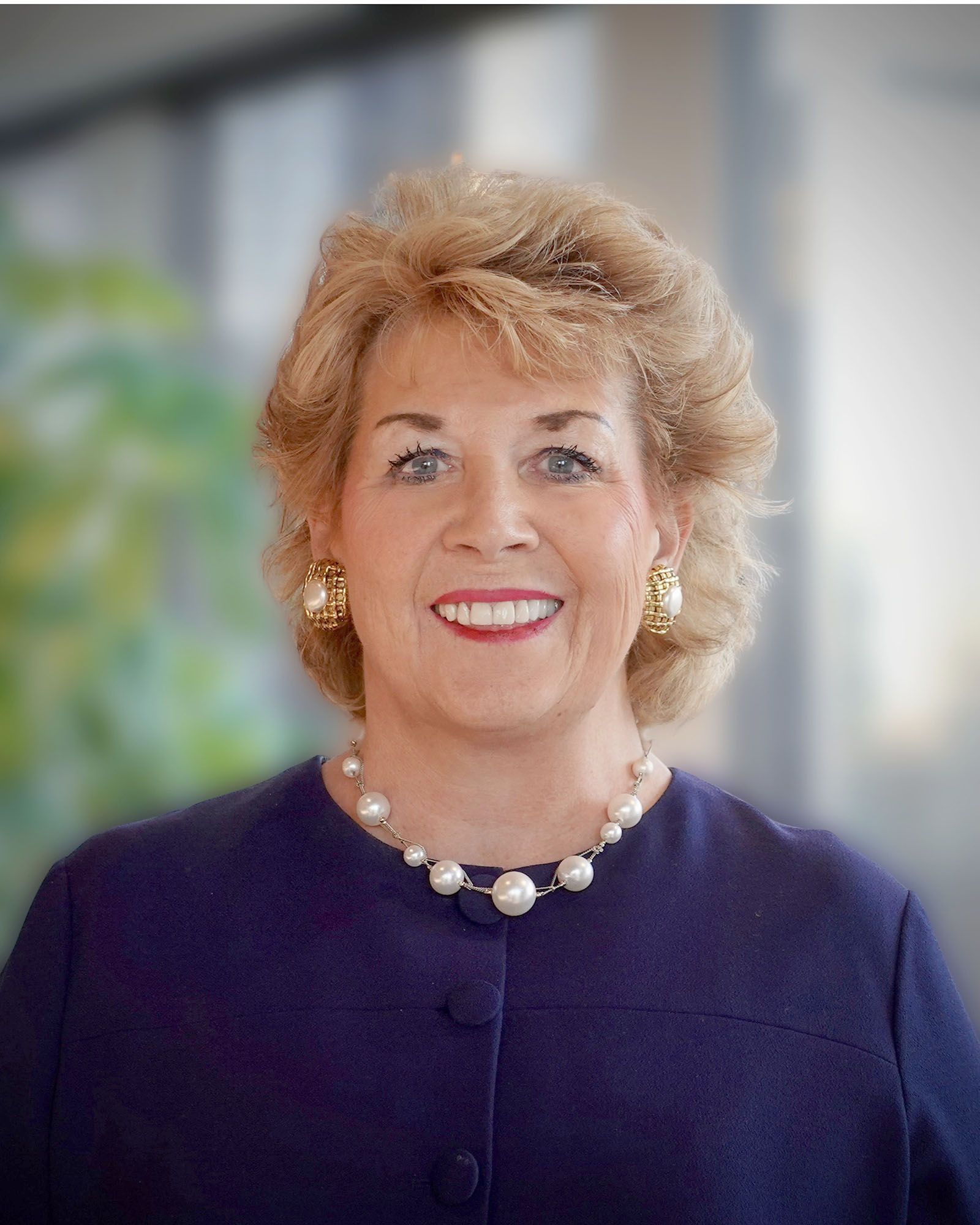
But there was another actor off-stage: the United States. In 1977, President Carter had made the first public statement by the White House on the conflict, calling for a government in Northern Ireland that could command widespread local acceptance and that would involve the support of the Irish government.
American investment, he pledged, would follow. Carter’s initiative was a departure from US policy to that point: not to interfere in what it considered the internal affairs of Britain, its strategic partner.
When President Reagan entered office, he maintained President Carter’s approach, discussing Northern Ireland regularly in his meetings with Prime Minister Thatcher, encouraging her to reach an agreement.
President Reagan visited Ireland in 1984. His words, addressing a joint session of both houses of the Irish parliament, still resonate with the Irish public —"let us not overlook legitimate cause for hope."
The same day as the Anglo-Irish Agreement, President Reagan and Speaker Tip O’Neill announced that the US would establish the International Fund for Ireland, together with other international partners, to invest in peace building and economic regeneration.
The Fund’s extraordinary work continues to this day, healing deep wounds from the conflict.
The US role continues also. Bipartisan support remained essential up to the Good Friday Agreement. It has been just as vital in its aftermath, as we work to sustain and deepen that peace.
What can we take from all this for today’s world?
No two conflicts are the same, but our experience tells us that it takes creativity and hard compromises to make peace. It takes political leadership and a spirit of inclusivity.
Support from international partners is indispensable. Principled and sustained American engagement, even in a conflict that touched on strategic interests, was crucial. It lifted us up at the worst of times.
We cannot possess hope without practicing it. It is the most fundamental craft we demand of ourselves.
Perhaps the simplest lesson of all is not to despair in the face of violence or under the weight of history: in the words of President Reagan, not, ever, to overlook cause for hope.
Geraldine Byrne Nason is Ambassador of Ireland to the United States