This is an edited version of a report by the AOH Freedom For All Ireland Committee on a transatlantic webinar held on Saturday, December 6.
Mark Kelly, who has been fighting for justice for his sister Carol Ann, since seeing her shot dead by a British soldier more than forty years ago, said “giving special protections to former British troopers under the Northern Ireland Troubles Bill would mean an amnesty for British Army murders under a new name."
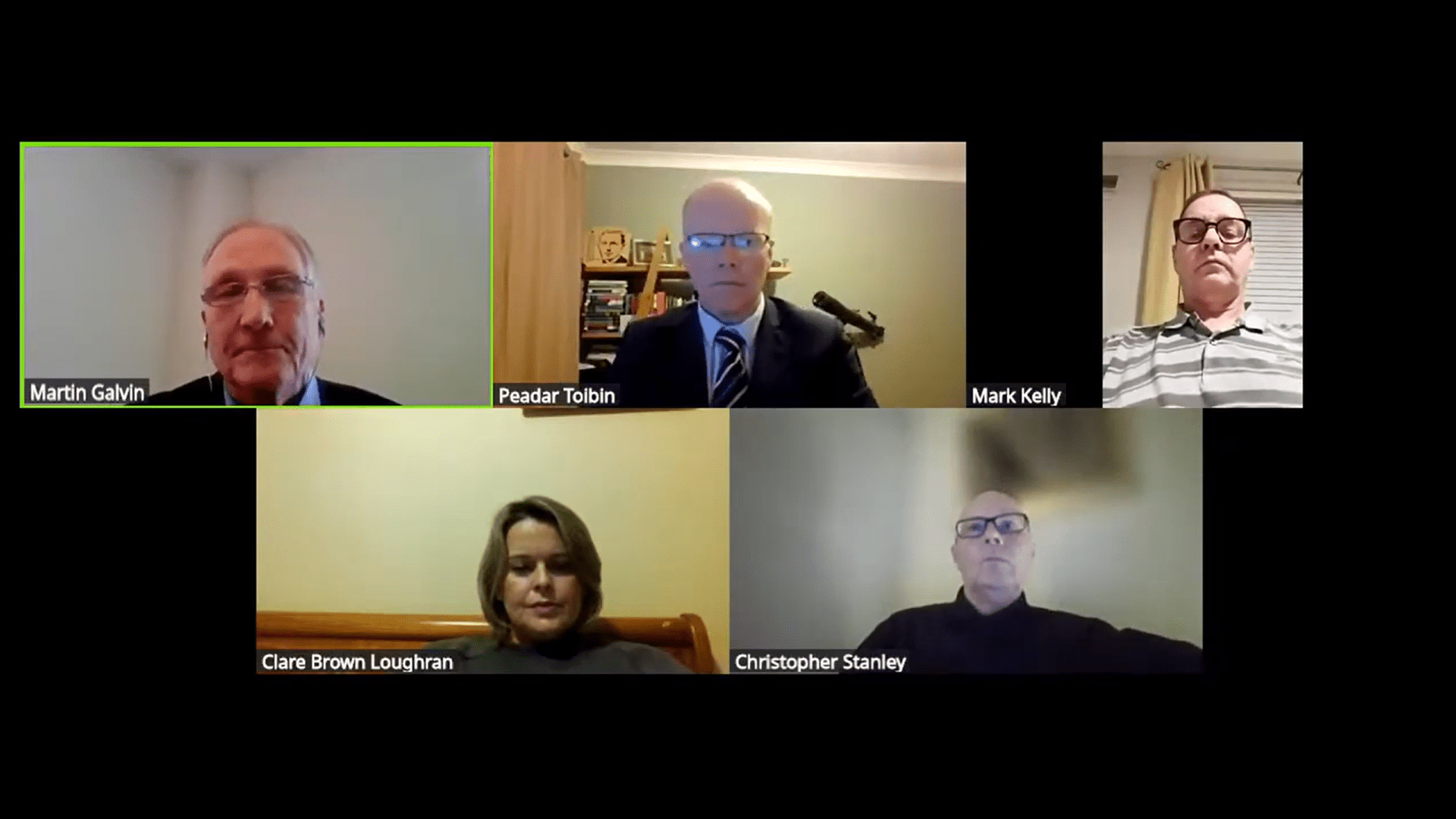
He was speaking along with another victims’ relative Clare Brown Loughran, legal expert Christopher Stanley, and Irish Dáil representative Peadar Toibin TD during a live webinar broadcast, hosted by the Ancient Order of Hibernians on Saturday December 6th.
Speakers noted that seeing concerns for British troops rather than for Irish victims dominate the early Westminster debates on the new legacy bill, had sparked fears that demands for "special protections" for former British Army troops will bring amendments which will deny justice.
Mark Kelly, then aged 13, had been playing football outside his home on May 19, 1981, when he saw his 12 year old sister, Carol Ann Kelly, shot dead by a British soldier firing a plastic bullet as she returned home with a bottle of milk. It was a tense time in the north, weeks after the deaths of Bobby Sands MP, and Francis Hughes on hunger strike in the H-Blocks of Long Kesh, but there was no rioting or disturbances in the area when the patrol of four British Army vehicles came into the Twinbrook estate and a soldier fired the shot which killed Carol Ann Kelly.

Neighbors who went to the Royal Ulster Constabulary barracks to file complaints about the killing were threatened they would be arrested and charged with rioting. Plastic bullets were deliberately fired at their homes on the following day.
News accounts blamed rioting and petrol bombs as reasons for shots being fired but nothing like that was happening at the time. The Coroner would not allow the family’s solicitor Oliver Kelly to ask why plastic bullets were fired. British troops laughed at family members during the proceeding. The Kelly family was told that three people, even children standing together in Republican areas like Twinbrook, would be considered a riot by crown forces.
Years later a family member requested an investigation by the Historical Enquiries Team (HET), a legacy investigative unit within the PSNI constabulary. The HET did not interview the numerous eyewitnesses available but just rubber stamped whatever was presented during the inquest. The HET was disbanded after the crown inspectorate reported the HET was heavily biased in favor of crown forces.
Mark Kelly said: ”The way they treated my family was horrendous. We got no investigation, zero justice and zero looking for justice.”
He has been fighting for justice for his murdered sister since 1981, but now fears "special protections" for former British troopers may become a thinly disguised amnesty for troopers who committed murder, or an excuse to block genuine investigations because of the prior inquest or HET report.
Clare Brown Loughran’s father Sean Brown was abducted and murdered as he locked up the local Gaelic club on May 12, 1997. No one was ever convicted of this murder, despite the involvement of multiple British agents.
Before closing the webinar, AOH National Freedom for All Ireland Chair Martin Galvin, who had moderated the discussion said:
“We are here with a new framework for legacy justice because the British never gave justice to victims’ relatives like Mark Kelly and Clare Brown Loughran. The AOH and Irish America must be vigilant to ensure that Britain keeps this agreement and gives victims the justice they have always deserved.”
AOH National President Sean Pender added: “The British government may have the power but we have the truth and it is important for us to stand behind the victims who are only fighting for the truth about their murdered loved ones.”